
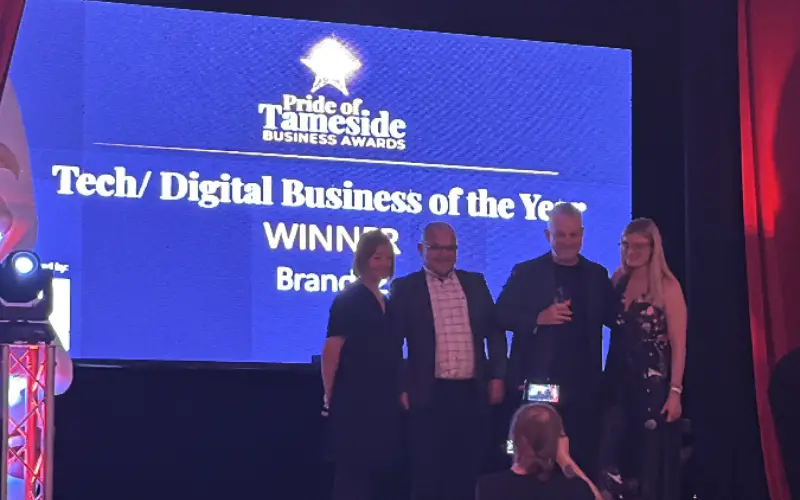
We've won Tech/Digital Business of the Year 2026!
12th Oct 2026
 By Jonny

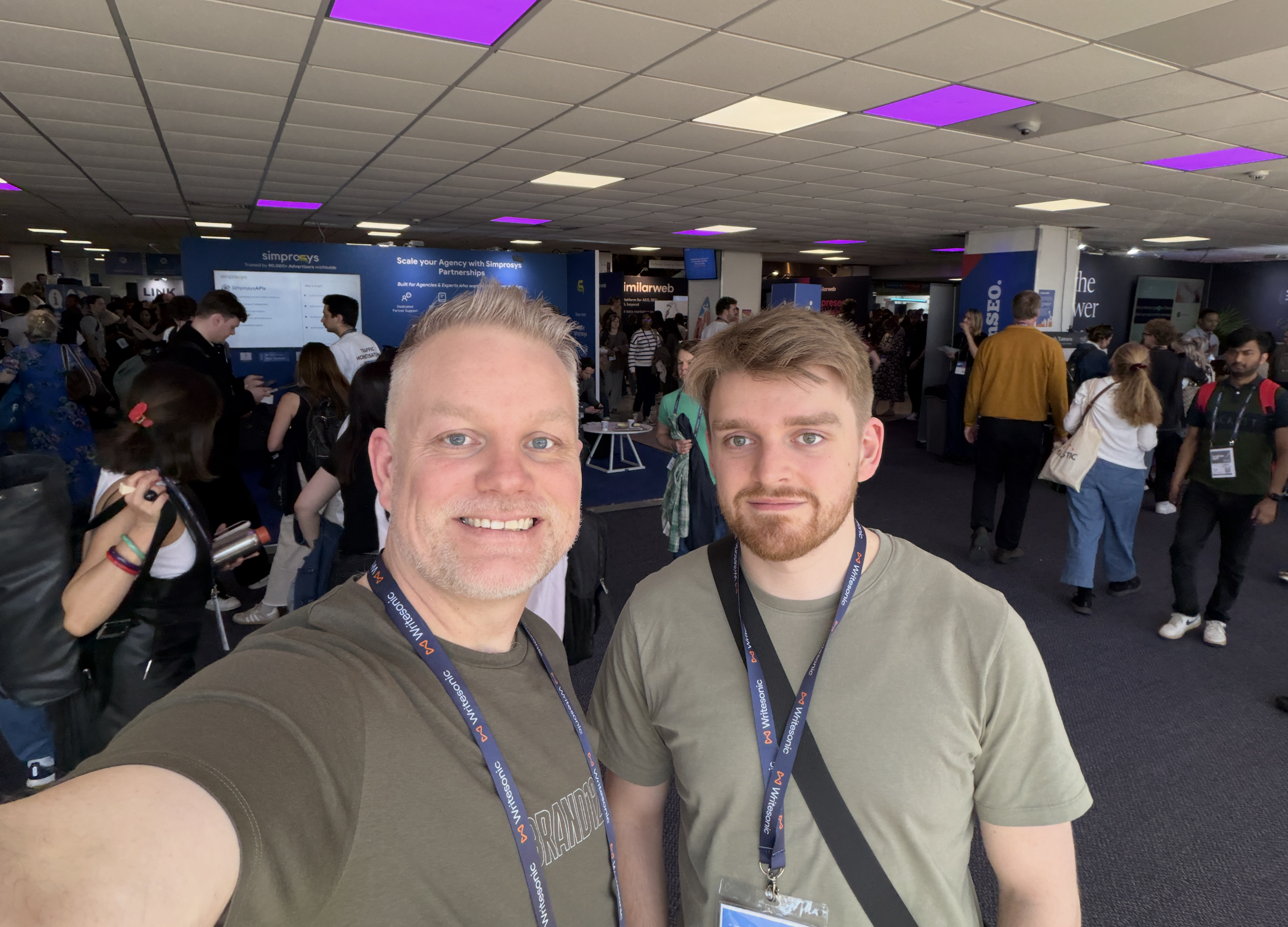
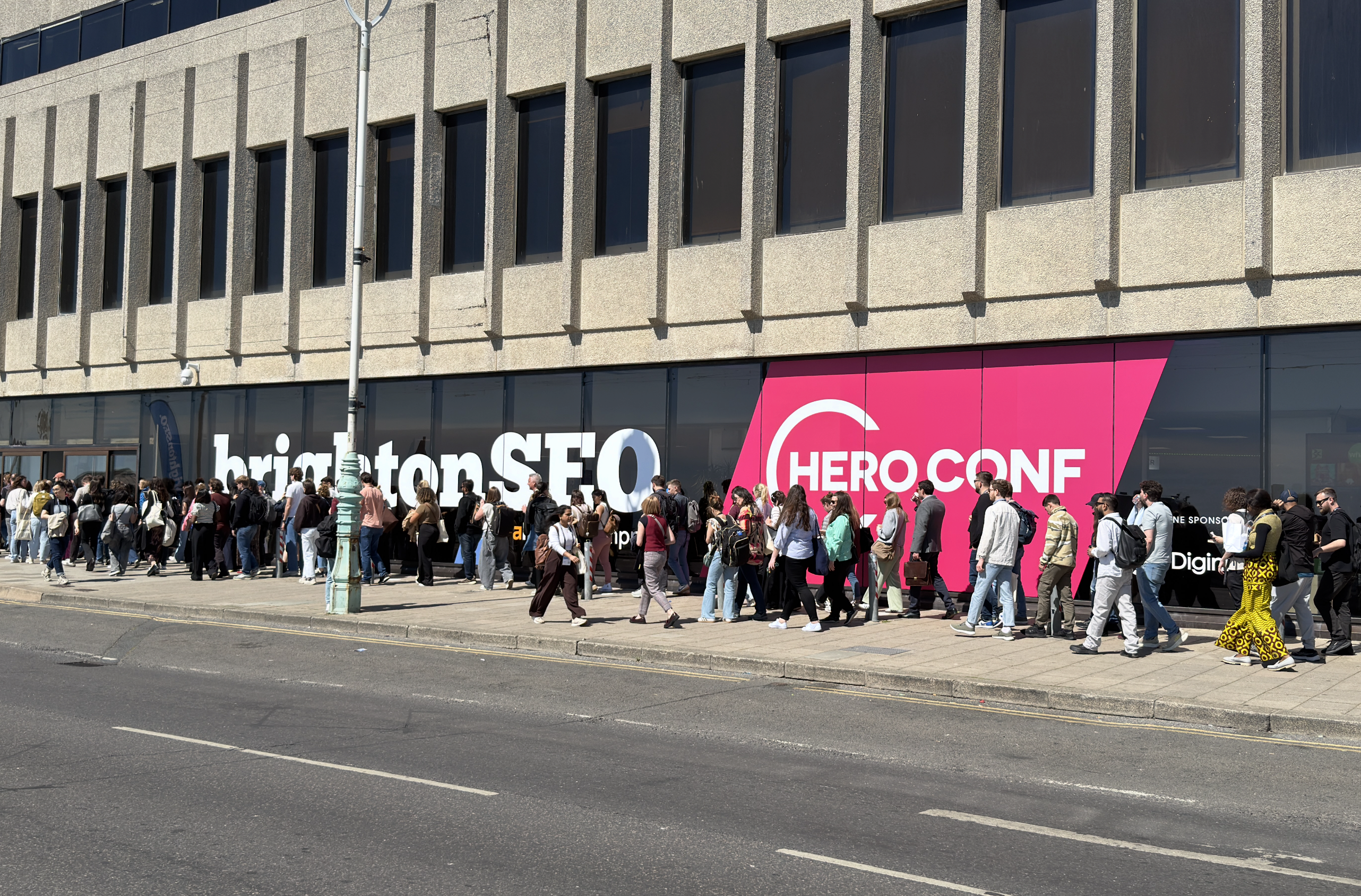
Late April, the SEO industry packs its bags and heads to the south coast. brightonSEO is the biggest search marketing event in Europe, the place where the conversations that shape the next year of search genuinely happen, and we make sure we are part of it.
Last week our founder Jonny, lead digital designer Liam and social content lead Chloe made the trip down to stunning Brighton.
Here is what stood out, what is shifting in the industry and what we are taking into client work as a result.
This year, AI was the conversation in almost every room. Generative Engine Optimisation (GEO) and AI search visibility ran through the agenda, the conversations between agencies and the hallway chats over coffee. It is no longer a fringe topic, it is the topic.
The shift everyone is grappling with is the same. Ranking on Google is no longer enough. The brands that win from here are the ones being mentioned, surfaced and cited inside the AI answers that more and more people are reading instead of scrolling through search results. Being found is now about being part of the response, not just appearing in a list of links.
It is a conversation we have been having with our clients for a while, and brightonSEO confirmed something useful. The industry is still working out exactly how to do this well, and the brands that move early on it will hold a meaningful advantage over the ones who wait.
Out of a packed agenda, two talks stayed with us all the way home.
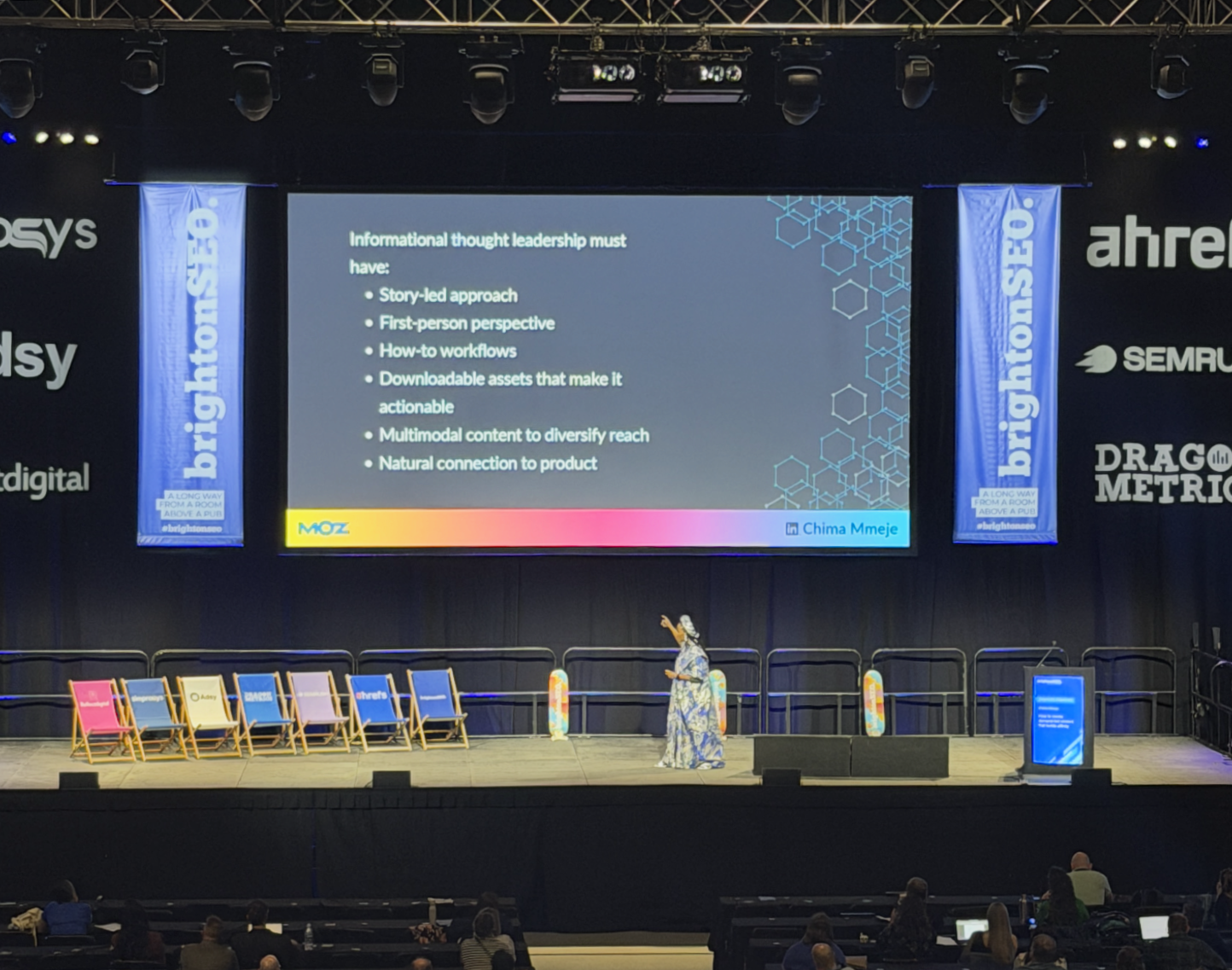
Chima is Senior Content Marketing Manager at Moz and one of the sharpest voices in the AI search and content authority space right now. Her talk made the case that the old way of creating content, built exclusively around keyword research, is no longer enough. Content now needs to be both reactive and proactive, shaped around demand as it is actually evolving rather than what a keyword tool says was searched for three months ago.
Her argument was that demand-led content trumps everything else, and she walked through seven ways to create it using AI tools that most of the room already had access to. The session made a strong case for understanding what your audience is genuinely asking right now, and responding with content that answers it quickly and credibly, while the question is still hot.
It was a useful reframing. Most agencies are still building content plans on quarterly keyword research. Chima's argument is that the brands pulling ahead are responding to demand in real time, and AI is the tool that finally makes that practical.
Watch Chima's talk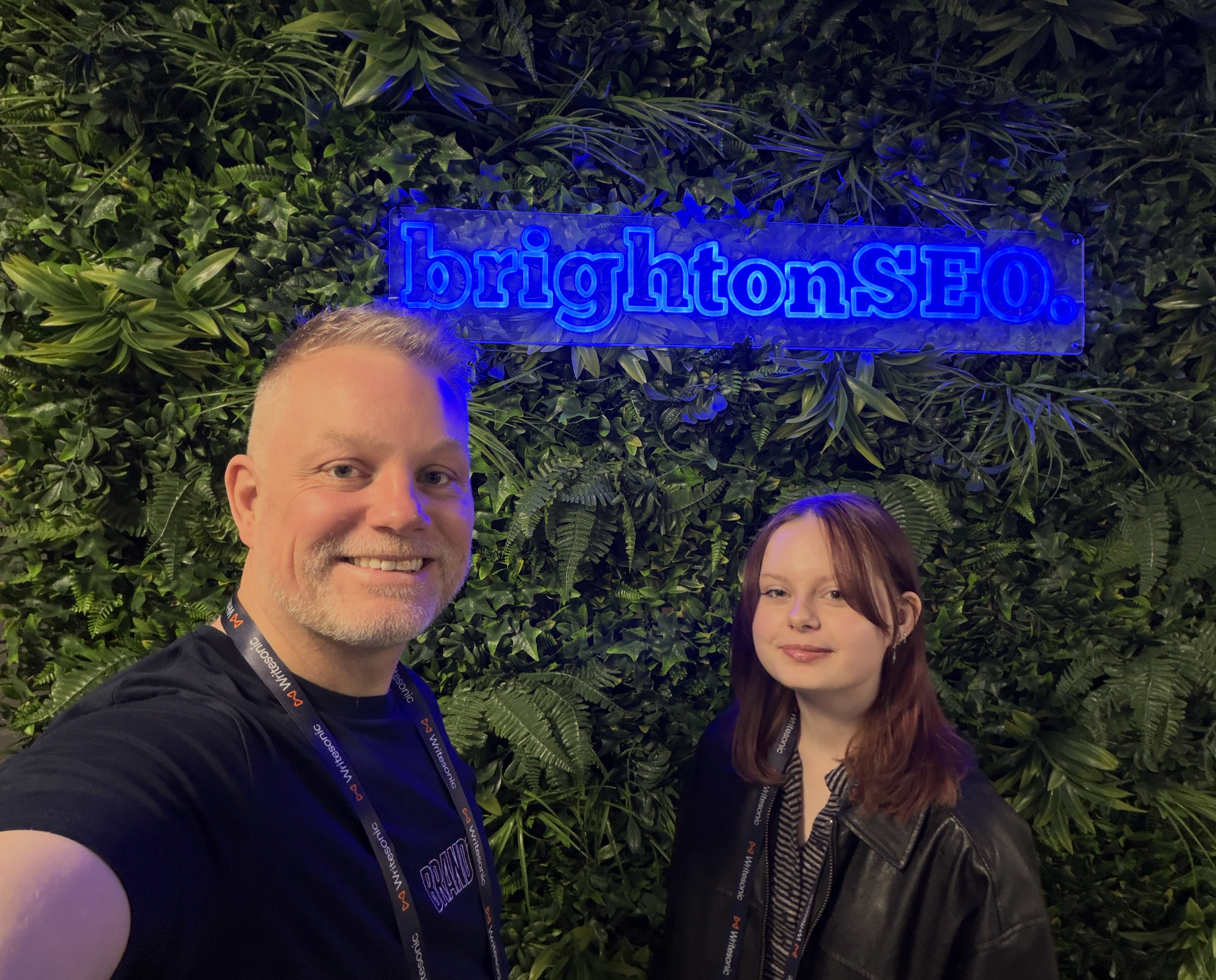
Annika's session was titled "Become a content scientist, a qualitative framework for creating and optimising user-first content". The argument was a sharp one. SEOs are good at using data to identify what content to create and which pages to optimise, but numbers alone cannot tell you whether the content is genuinely useful, especially in an AI landscape where the data is not always available in the first place.
Her solution was a Content Science framework, a qualitative methodology for evaluating and creating content that performs across both traditional search and AI citations. Think of it like grading a university research paper, she said. Rigorous, repeatable, focused on substance rather than quick optimisation. It was one of the most practical and immediately useful frameworks we picked up at the event.
Worth pairing with Chima's session in your thinking. Chima makes the case for responding to demand in real time. Annika gives you the framework for making sure what you produce in response is genuinely good. Together they form a complete picture of where content marketing is heading.
The other reason brightonSEO is worth the trip is the agency-to-agency conversations that fill the gaps between sessions. This year, almost every one of them turned to the same thing. How are you using AI in real client work, and what is actually moving the needle?
The honest answer across the conversations was that everyone is figuring it out, but the people doing it well are doing it with intent rather than hype. AI is being used in research, in identifying citation opportunities, in structuring content for both human readers and AI parsing, in tracking how brands appear across AI tools. It is being treated as a serious capability, not a novelty.
It was reassuring to find our own approach to AI search visibility lining up closely with where the best agencies are heading. We have been thinking about this for a while, and it shows in the work we are doing for our clients.
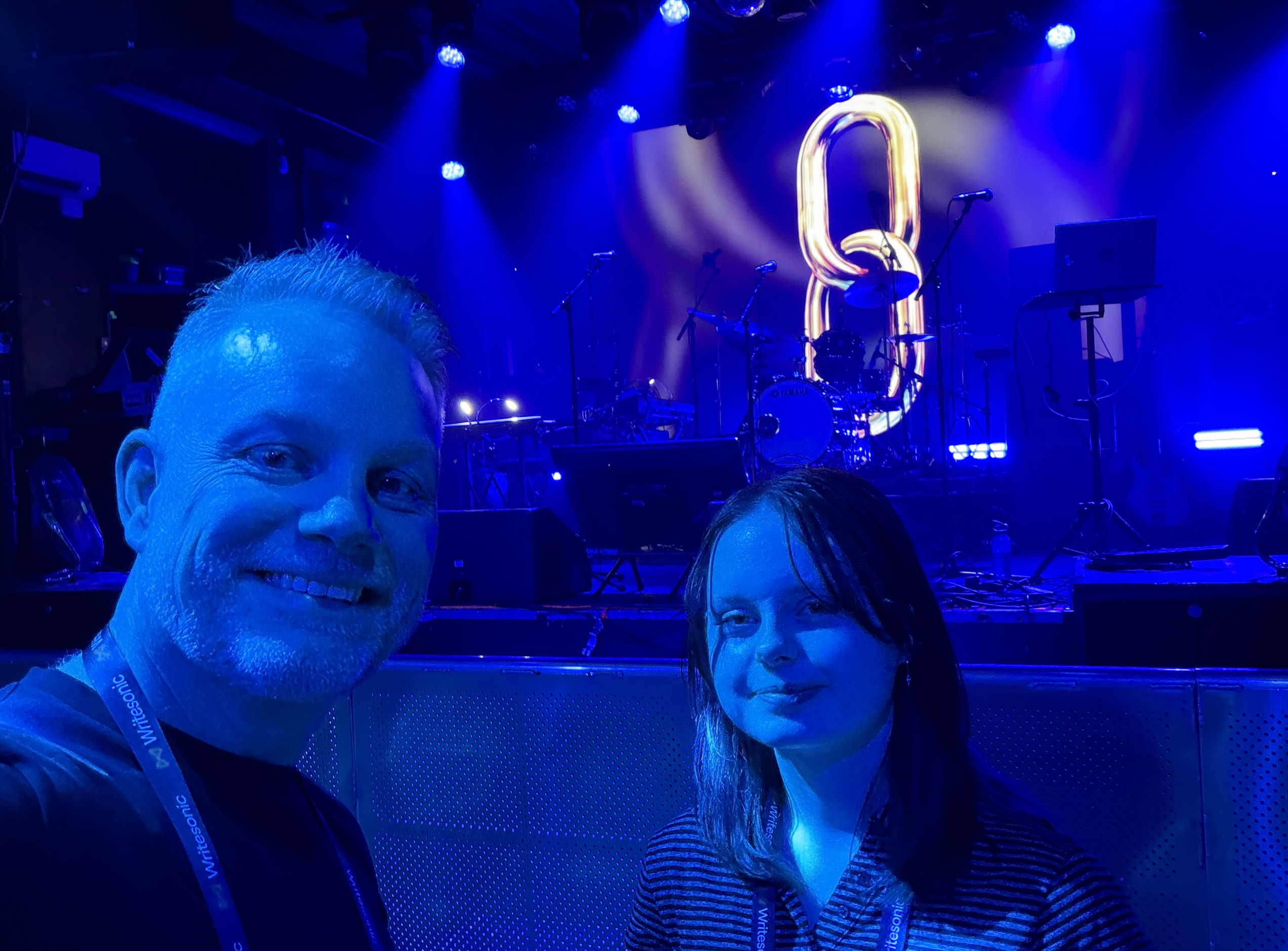
We would be hiding something if we did not mention the Live Karaoke. brightonSEO has a long-standing tradition of an evening event that turns a conference full of search marketers into a room full of enthusiastic singers, and it lived up to its reputation. Excellent fun, and a good reminder that the industry takes the work seriously without taking itself too seriously.
We will leave the specifics of who sang what for another day.
A few things came back to Manchester with us.
Content planning needs to get faster. Demand-led content, responding to what audiences are asking now rather than what a tool said last quarter, is moving from a nice idea to a real competitive advantage. We are rethinking how we structure content workflows for clients to reflect it.
Qualitative content evaluation deserves more weight in how we plan and review content for clients. Numbers tell us what to make, not whether it is any good, and AI search is sharpening that gap.
GEO and AI visibility are no longer experimental, they are core search work. Our AI Search Optimisation service is doing exactly this for clients today, and brightonSEO confirmed it is where the industry as a whole is heading.
The brands that prepare for AI-mediated search now will own visibility in it later. The ones that wait until it is the standard will be playing catch-up.
 By Jason
 By Liam